J.T. Headley
If you have notes on accuracy, content, site links, or any other requests regarding this page, please get ahold of us at contact@hamiltonandsonsauctions.com.
Joel Tyler Headley (1813–1897) was an American clergyman, historian, author, newspaper editor, adventurer and politician who served as Secretary of State of New York. He was born at Walton, New York to Isaac Headley, a Presbyterian clergyman, and Irene Benedict Headley. After training for the ministry, he graduated from Union College in 1839 and took a course in theology at the Auburn Theological Seminary, then preached at Stockbridge, Massachusetts, but soon gave up his profession due to the strain of ill health, traveling to Europe to recover before turning permanently to writing.
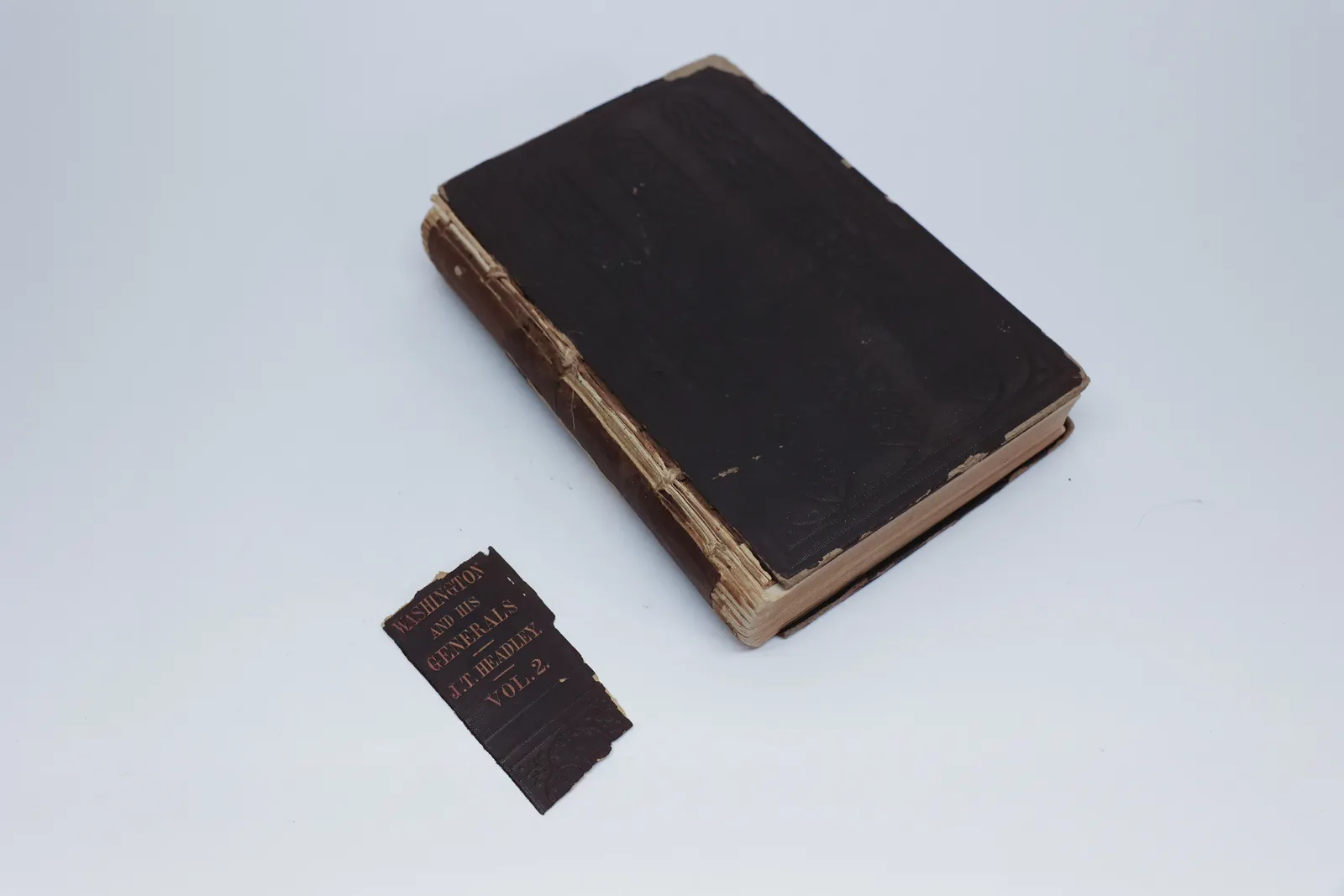
Headley became one of the most widely read popular historians of mid-nineteenth-century America. His account of the Continental Army's commanders, published as Washington and His Generals in 1847, followed the success of his earlier Napoleon and His Marshals and was one of many historical works he produced, including "History of the War of 1812," "Life of Cromwell," "Life of Havelock," "Sacred Mountains," "Sacred Scenes and Characters," "The Great Rebellion," "Grant and Sherman," and "History of the Great Riots," among others. He was immensely popular with the general public, and he was a successful writer, selling over 200,000 books during his lifetime, even as some critics, including Edgar Allan Poe, disparaged his scholarly rigor.
Beyond writing, Headley had a notable public career: in 1854 he was elected to the New York State Assembly from Orange County, and the following year he was elected Secretary of State of New York, an office he filled with marked distinction. He settled in Newburgh, New York, where he remained an active civic figure late in life, and he died there in 1897. Early, first-edition copies of his popular histories, such as Washington and His Generals, remain sought after by collectors of nineteenth-century Americana and Revolutionary War literature, particularly volumes retaining original cloth bindings, gilt lettering, and steel-engraved portrait frontispieces from the period.
Sources: