John H Davis
If you have notes on accuracy, content, site links, or any other requests regarding this page, please get ahold of us at contact@hamiltonandsonsauctions.com.
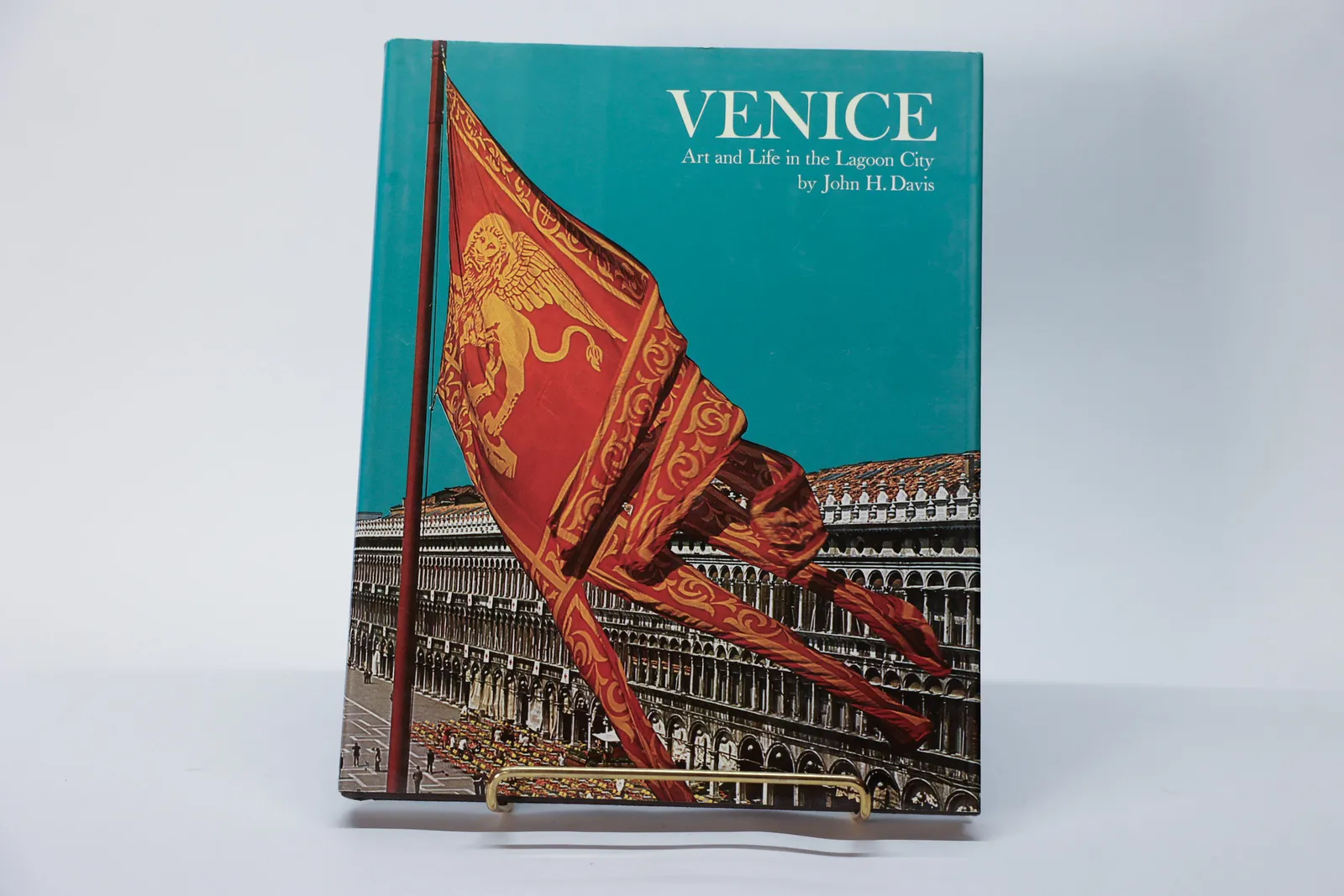
John Hagy Davis (1929–2012) was an American author best known for his books chronicling prominent American families and organized crime. He was an American author who wrote several books on the Bouvier and Kennedy families and on the Mafia, both the Sicilian Mafia and its Italian-American offshoot. He was the son of stockbroker John Ethelbert Davis and Maude Reppelin Bouvier, younger sister of John Vernou Bouvier III and, therefore, first cousin of Jacqueline Kennedy Onassis and Lee Radziwill, both grandchildren of prominent New York lawyer John Vernou Bouvier Jr. Davis was a 1951 graduate of Princeton University as well as Columbia University. After the Navy, Davis studied at the Italian Institute for Historical Studies in Naples, and directed a cultural center in southern Italy, an experience that likely informed his later writing on Italian subjects such as Venice.
Davis built a long career as a popular historian and biographer of wealthy and famous American dynasties. He was the author of several books about notable American families such as the Bouviers, the Guggenheims and the Kennedys. His most controversial and commercially successful work came later in his career: in 1989 the New American Library published Mafia Kingfish: Carlos Marcello and the Assassination of John F. Kennedy, in which Davis implicated the mafia and Carlos Marcello in the assassination of John F. Kennedy. The book drew strong reactions from critics; Publishers Weekly called it an "engrossing, startlingly detailed biography of a Mafia don," while Kirkus Reviews said its centerpiece made "a plausible, even persuasive, case for the proposition that the Gulf Coast godfather masterminded the assassination of JFK."
Davis's insider connection to one of America's most storied political families, combined with his prolific output on subjects ranging from Venetian art and history to organized crime, made him a recognizable name in popular nonfiction of the late twentieth century. His books, often issued in well-illustrated hardcover editions by major publishers, remain sought after by collectors interested in Kennedy-era Americana, Bouvier family history, and mid-century travel and art literature. He died in Manhattan in 2012 and was buried in Woodlawn Cemetery in the Bronx.
Sources: