Oluf Reed Olsen
If you have notes on accuracy, content, site links, or any other requests regarding this page, please get ahold of us at contact@hamiltonandsonsauctions.com.
Oluf Bernhard Reed-Olsen (1918–2002) was a Norwegian resistance fighter, pilot, and MI6 secret agent whose wartime exploits made him one of Norway's most celebrated figures of the German occupation. Trained as a commercial pilot with Widerøe before the war, he began resisting the Nazis the very day Germany invaded Norway in April 1940, and within days had helped blow up the Lysaker Bridge outside Oslo, an act of sabotage with significant political repercussions. When World War II reached Norway with a German invasion on 9 April 1940, he started resistance work on the same day, and on the night between 13 and 14 April he blew up the Lysaker Bridge together with Kåre Moe and Leif Moe.
After escaping Norway by sailing boat, he joined the exiled Royal Norwegian Air Force in England and trained in Canada before being recruited by MI6, the Secret Intelligence Service, in 1943. He was then parachuted back into Norway in April 1943 to run clandestine radio operations and intelligence-gathering missions on the movements of German shipping under constant threat of capture. For this dangerous work he was decorated with the Norwegian War Cross with Sword and British Distinguished Service Cross.
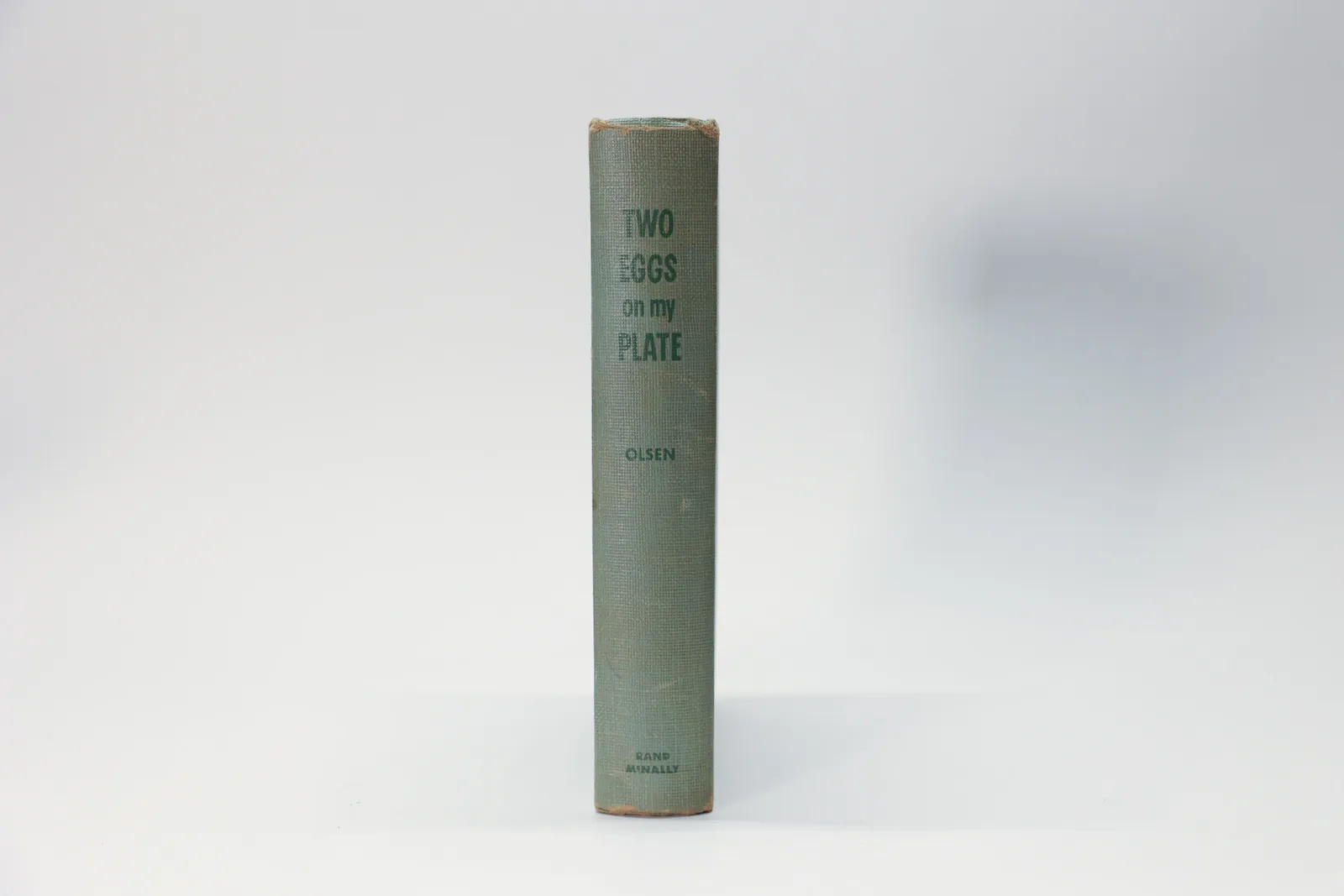
After the war, he was a businessman and Scouting leader, and wrote books and contributed to a film based on his war experience. His memoir of his espionage work, published in English as "Two Eggs on My Plate," became a well-regarded account of Norwegian resistance activity and Special Operations Executive/MI6 wartime operations, and copies signed by Reed-Olsen or from early printings are prized by collectors of World War II militaria and espionage literature for their firsthand connection to a genuine wartime hero and secret agent.
Sources: