Salvador Dalí
If you have notes on accuracy, content, site links, or any other requests regarding this page, please get ahold of us at contact@hamiltonandsonsauctions.com.
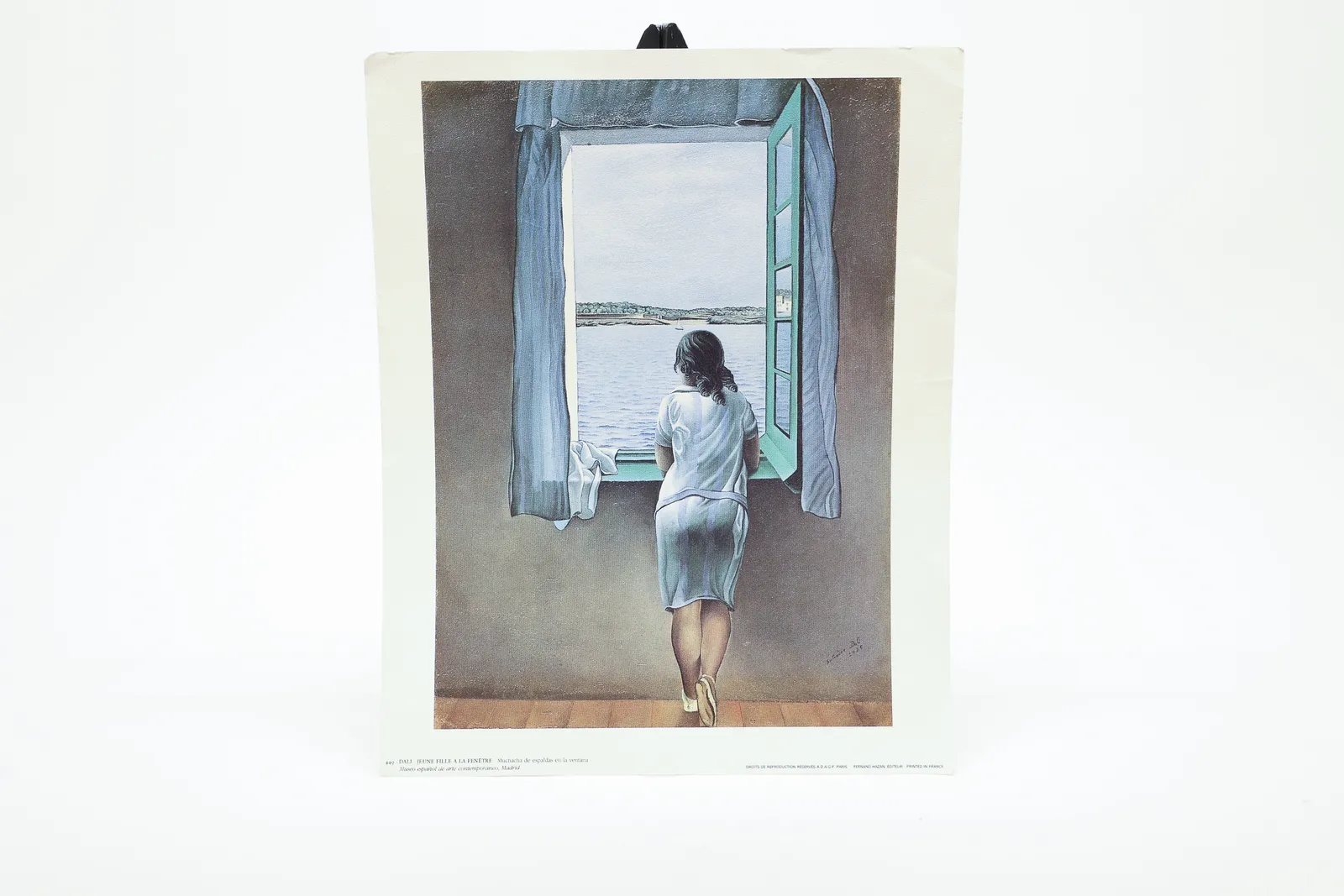
Salvador Dalí (1904–1989) was a Spanish artist who became one of the twentieth century's most famous and flamboyant painters, closely associated with the Surrealist movement though his career spanned far more than that single style. Born in Figueres, Catalonia, he trained at the Real Academia de Bellas Artes de San Fernando in Madrid before developing the meticulous, dreamlike imagery for which he is best remembered, including iconic works such as "The Persistence of Memory." Beyond painting, he worked prolifically in printmaking, sculpture, film, and design, cultivating a public persona as eccentric as his art.
The image associated with this piece derives from Dalí's early realist period of the 1920s, before he fully embraced Surrealism. In the beginnings of his career in the 1920s, a young Dalí experimented with two of the predominant styles of the time, Cubism and Realism, drawing on Italian and French publications of the era. Notable among these realist works is a series of family portraits made between Figueras and Cadaqués, particularly of his sister Anna Maria, who was the focal point of six of the seventeen paintings shown at Dalí's first solo exhibition in Barcelona in 1925. The resulting composition, showing his sister with her back turned as she looks out over the bay of Cadaqués, is considered a balanced, classicist work indebted to Ingres and Picasso. That painting, now held in a major Madrid museum, has since become one of Dalí's most reproduced and recognizable early images.
Dalí's enduring fame, his role as a pioneering figure of Surrealism, and the historical importance of his youthful realist portraits of Anna Maria all contribute to the broad collectibility of works and authorized reproductions associated with his name, spanning original paintings to prints and editioned graphics distributed through galleries and museum collections.
Sources: