Tony Paul
If you have notes on accuracy, content, site links, or any other requests regarding this page, please get ahold of us at contact@hamiltonandsonsauctions.com.
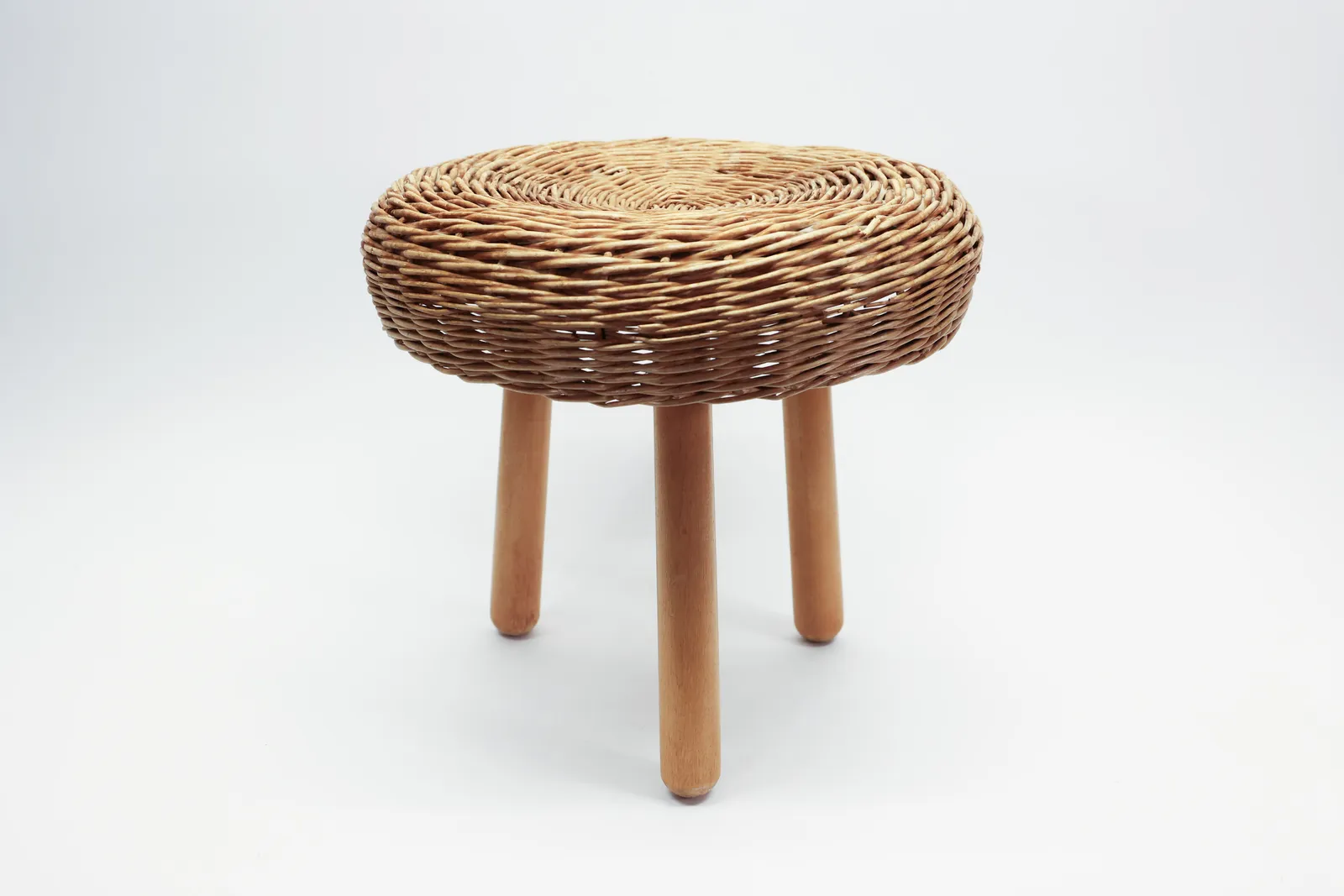
Tony Paul (1918–2010) was an American industrial designer born in the Bronx, New York, who studied at the Pratt Institute and went on to a career spanning six decades. He began his career as a designer for Robert Barber, Inc., and also worked on ergonomic design for Angelo Bisenz Associates, before eventually founding his own studio, Tony Paul and Associates. Working chiefly through the 1940s, 50s, and 60s, he emerged as one of the most influential designers of the time, creating lamps, furniture and accessories noted for their modern aesthetic and innovative use of materials, with bold geometric shapes, clean lines and unexpected material combinations, such as metal and wood.
Paul's output was remarkably wide-ranging, encompassing furniture, lighting, ceramics, and dishware, and he partnered with a number of well-regarded manufacturers of the era. His designs were produced by various companies such as Raymor, Westwood, Verplex, Woodlin-Hall, and The Elton Company, and he is also associated with firms including Woodard, Selig, and Thayer Coggin. His hand-woven wicker-and-wood stools, with their distinctive coiled tops set on turned wooden legs, are among his most recognizable and frequently reproduced designs, prized today for their sculptural, organic silhouette that bridges folk craft and mid-century modern minimalism.
Paul's reputation as a serious design talent was cemented during his lifetime: he won two awards from the Museum of Modern Art in the 1950s, a distinction that placed him alongside the most celebrated industrial designers of the postwar American design boom. Because much of his furniture, like many mid-century wicker and rattan pieces, was produced in limited runs and is now often found only in "attributed to" condition due to inconsistent labeling practices of the era, well-preserved, identifiable examples of his work are especially sought after by collectors of American mid-century design.
Sources: