Oneida
If you have notes on accuracy, content, site links, or any other requests regarding this page, please get ahold of us at contact@hamiltonandsonsauctions.com.
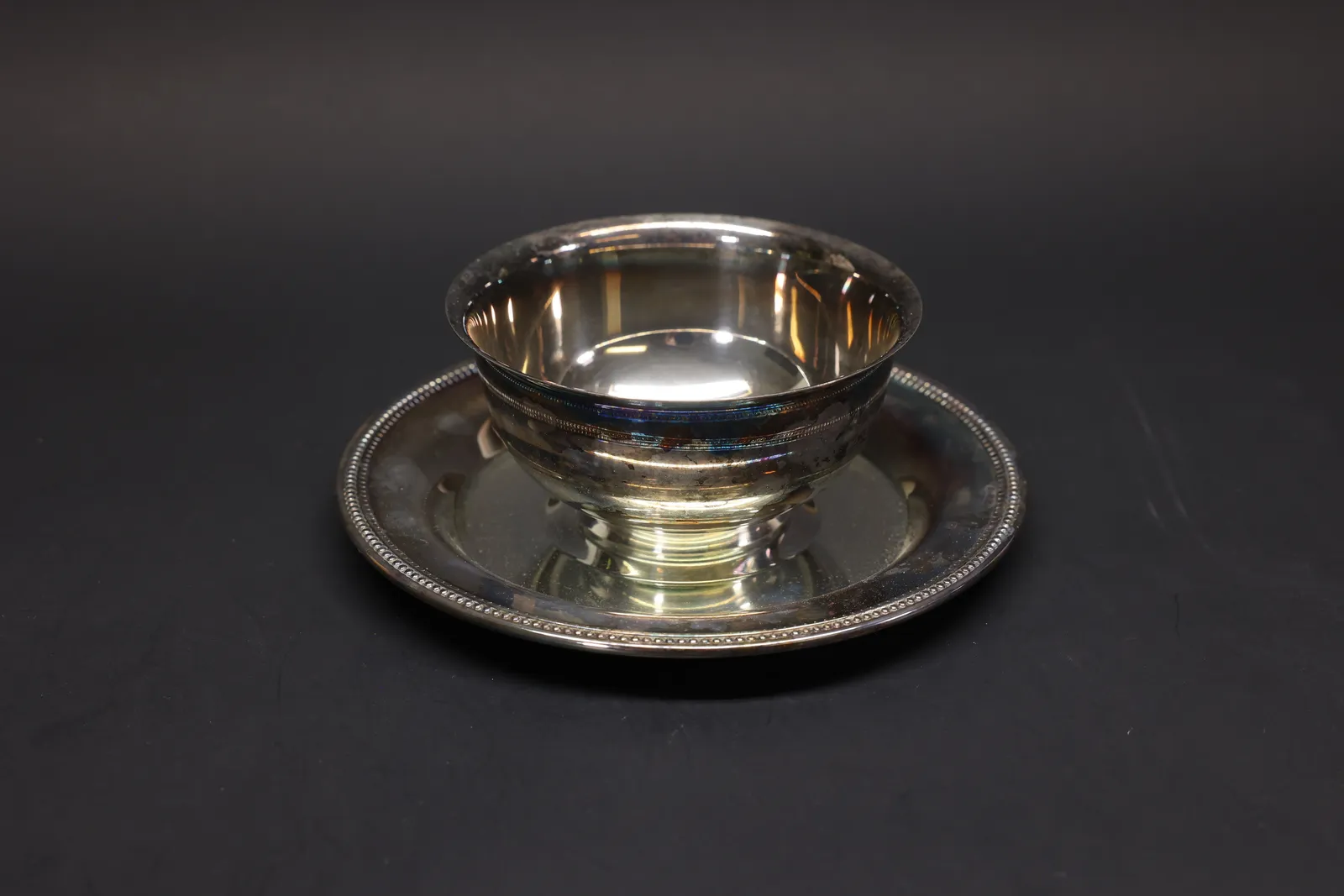
Oneida traces its origins to the Oneida Community, a utopian religious commune founded by John Humphrey Noyes in Oneida, New York, in 1848. The company itself was not formally organized until 1880, though the roots of the business date to the Community, whose members made steel flatware blanks that were sold to the Meridian Britannia Company for silverplating. By the 1890s the group had shifted its focus decisively toward tableware, dropping its other products to focus on the cutlery market, and under the leadership of Pierrepont Noyes and later Miles Robertson the firm grew into one of the most prominent names in American silver.
Oneida Ltd. became the world's largest stainless steel and silver-plated flatware maker, with operations across the United States, Canada, Mexico, the United Kingdom, and Italy manufacturing and marketing sterling, silver-plated, and stainless products, commercial china tableware, and industrial wire. The company's name change in 1935, to differentiate tableware produced by Oneida from that of lower-quality subsidiaries such as Wm. A. Rogers, reflected a deliberate effort to build a reputation for superior craftsmanship and quality control that endured for generations of American households.
Pieces bearing the Oneida mark are widely collected today because they represent a distinctly American industrial and social history, tracing back to a 19th-century utopian experiment that transformed into a global tableware giant. The company also managed an innovative transition to the manufacture of stainless steel flatware in 1961, which eventually dwarfed its production of silver-plated flatware, meaning surviving silver-plated hollowware and flatware from earlier eras hold particular interest for collectors as examples of the brand's formative decades before that shift. Its long, largely labor-dispute-free manufacturing history and consistent reputation for quality have helped sustain enduring demand for its vintage pieces among collectors of American silverware.
Sources: