Reed & Barton
If you have notes on accuracy, content, site links, or any other requests regarding this page, please get ahold of us at contact@hamiltonandsonsauctions.com.
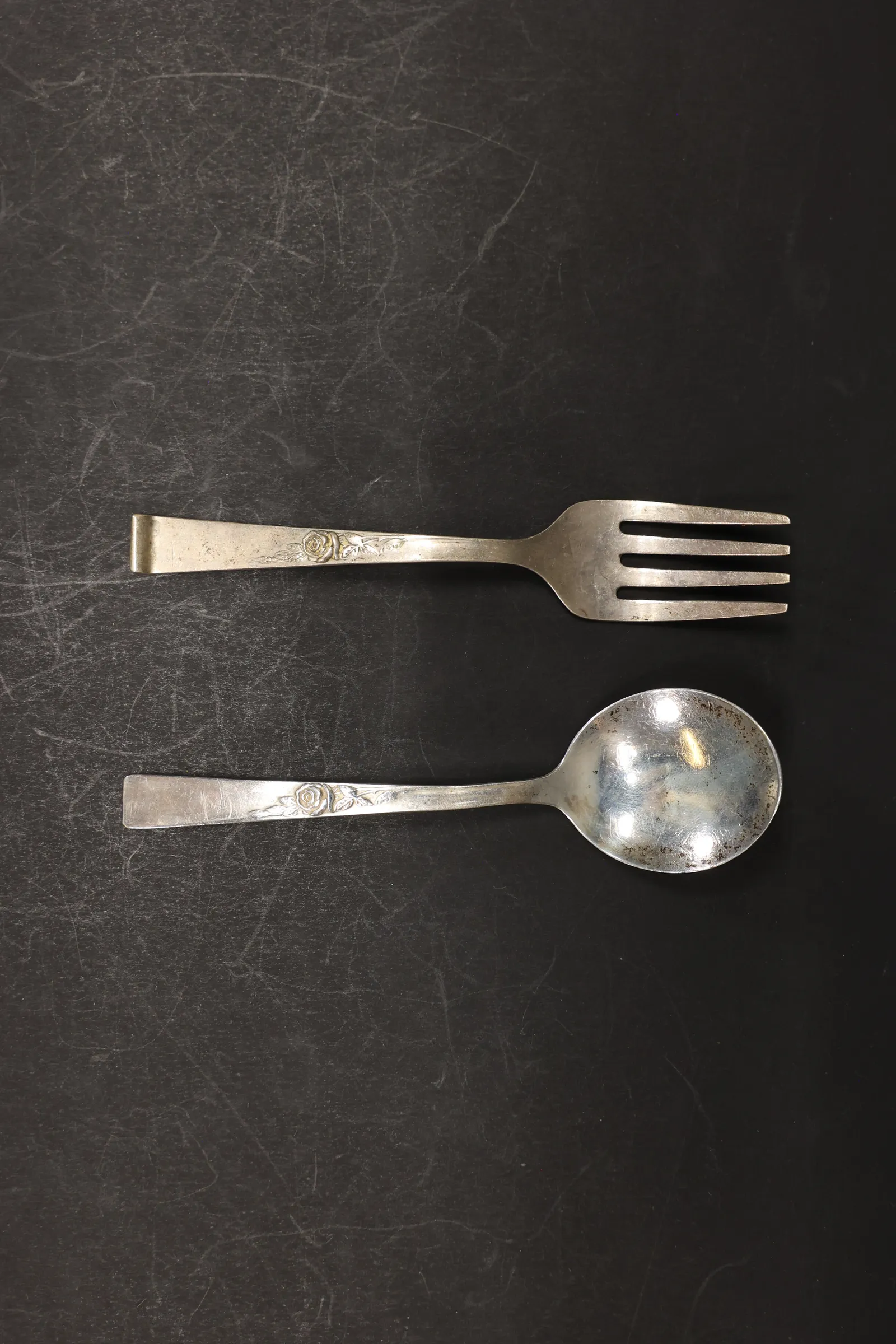
Reed & Barton was one of America's most prominent and long-lived silversmithing firms, operating in Taunton, Massachusetts, from 1824 until 2015. The company opened its doors in 1824 when Henry G. Reed and his business partner Charles E. Barton purchased the failing company owned by Isaac Babbitt, which produced Britannia ware using a material similar to pewter. The firm began as a manufacturer of Britannia ware, a form of pewter popular during the early 1800s century, before shifting to silver plate by mid-century, and as sterling silver became more widely affordable, Reed & Barton began manufacturing product in sterling in addition to silver plate. Reed and Barton ran the business together for thirty years until Barton passed away in 1867, and in commemoration of his old friend, Reed kept "Barton" in the company name.
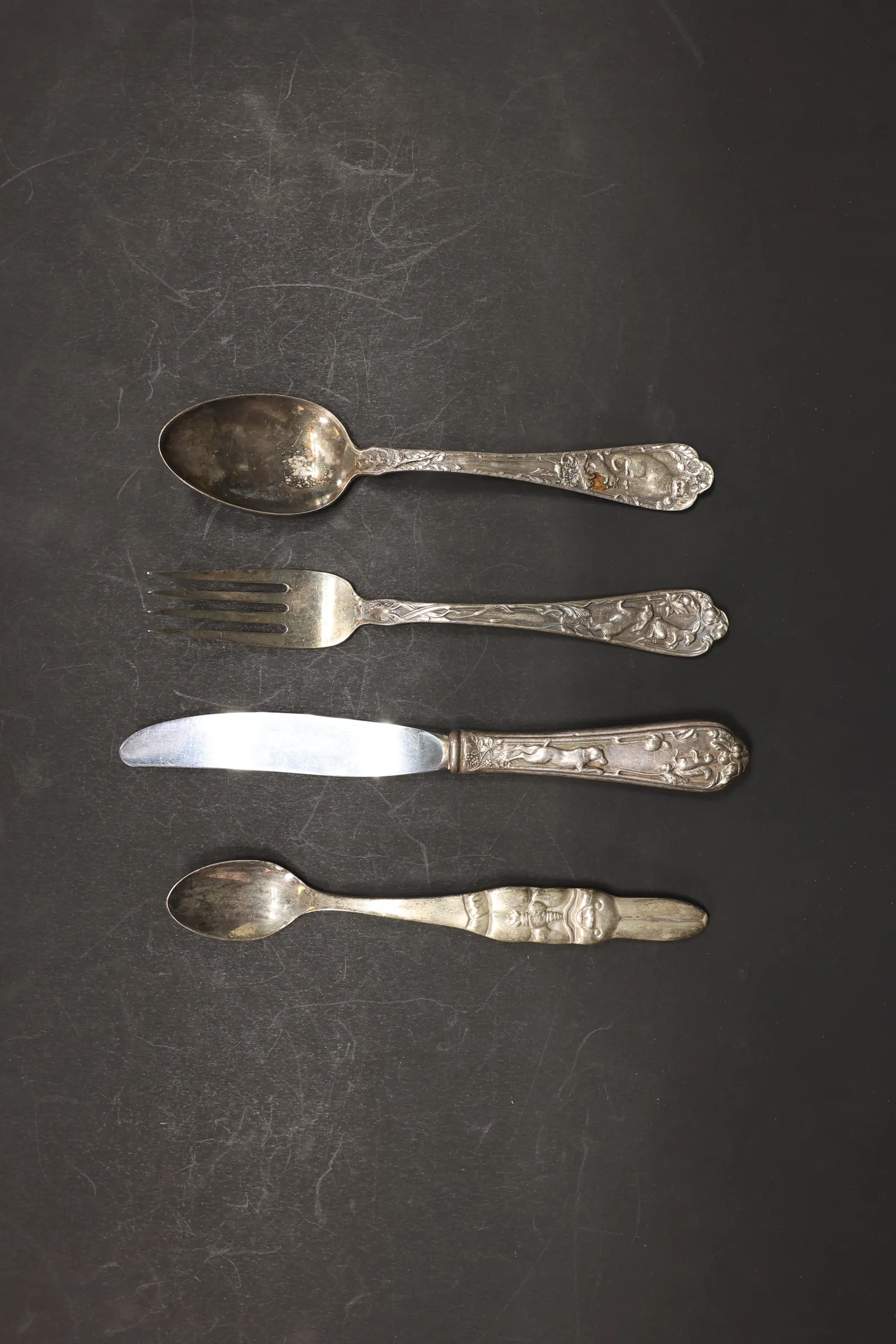
Over nearly two centuries the firm built an enormous reputation for craftsmanship, producing flatware, holloware, and giftware ranging from formal sterling table services to decorative and figural pieces aimed at a broad domestic market. The name Reed & Barton became synonymous with quality craftsmanship for well over a century, building a reputation out of the production of fine giftware, tableware, stemware, dinnerware, and more, creating countless highly collectible pieces. Operating from 1824 to 2015, the company's success was instrumental in Taunton becoming known as the "Silver City." Its output included figural and children's flatware patterns with sculptural handles depicting animals, nursery figures, and naturalistic motifs, a category the firm was especially known for in the late nineteenth century.
Pieces by Reed & Barton are collectible today both for their age and pedigree as products of one of the oldest and most historically significant American silver manufacturers, and for the artistry of their die-struck and hand-finished designs. The company's manufacturing complex in Taunton is listed on the National Register of Historic Places, underscoring its historical importance, while the eventual closure of the firm after nearly two centuries of continuous operation has added to the desirability of its earlier sterling and silverplate wares among collectors of American decorative arts.
Sources:
- Reed & Barton - An influential and significant silversmith in the 19th & 20th century
- Reed & Barton additional records
- Leonard, Reed, & Barton, Taunton, Massachusetts - Guide to Value, Marks, History | WorthPoint Dictionary
- Reed & Barton, Taunton, Massachusetts, Post-1850s - Guide to Value, Marks, History | WorthPoint Dictionary
- Reed and Barton Complex
- Reed & Barton - Wikipedia